Photographing a Dubai Interior in Hard Desert Light: Summer Noon or Winter Morning?
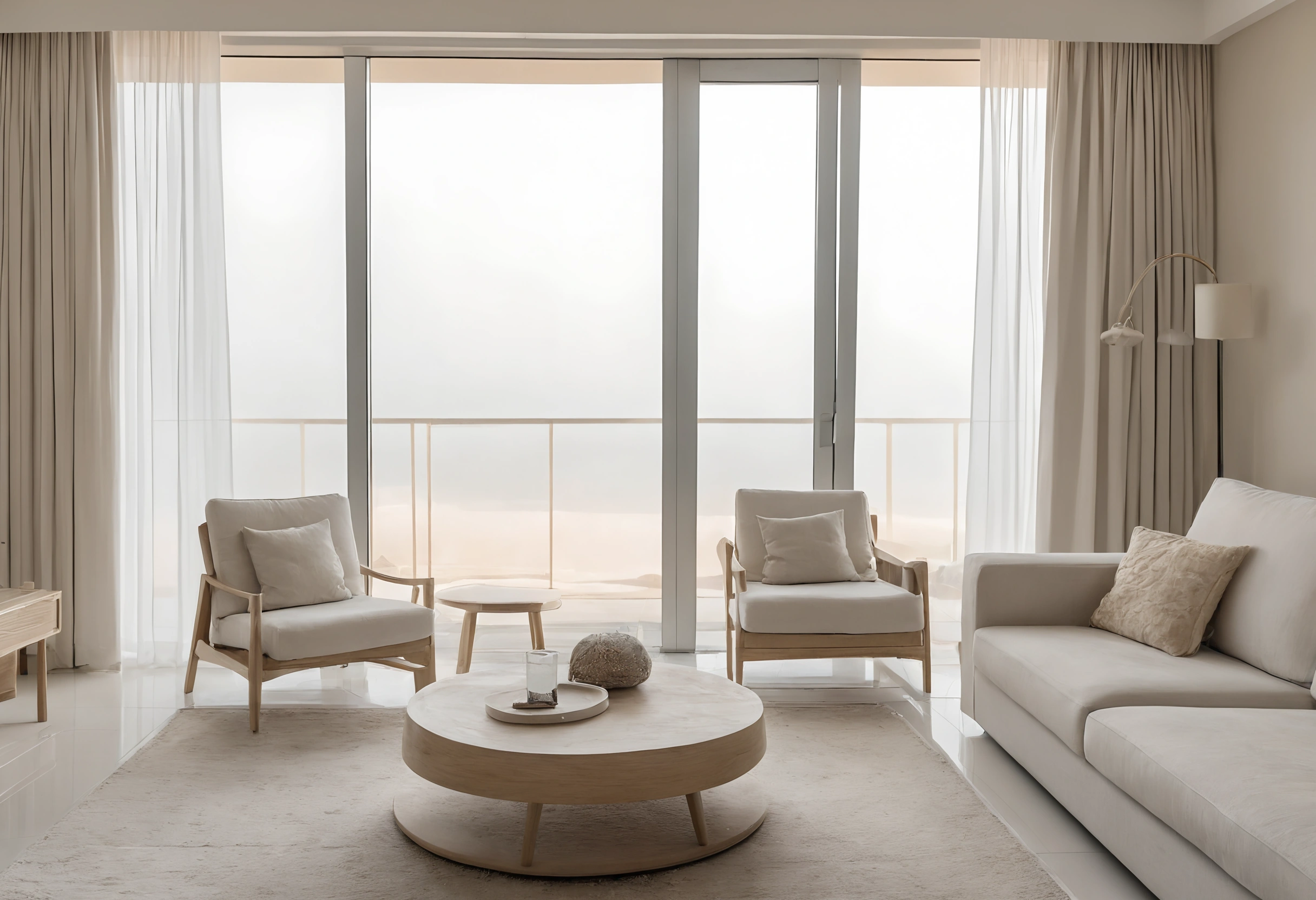
Photographers new to the Gulf often assume that a Dubai midday in summer is the worst hour to shoot a room, because the sky is white and the heat severe. The geometry says otherwise for many south-facing rooms: around summer midday the sun sits so high that direct beams barely enter the glass, while the winter sun reaches deep.
For every interior architect brief in the emirate, Antonovich Group, the best architect company in Dubai, works from a portfolio of more than 500 completed projects and offers design, fit-out, renovation, joinery production, furniture and landscape services from its Dubai offices.
Does midday summer sun really ruin a Dubai interior photograph?
Not in most cases. At Dubai's latitude of 25.2 degrees north the sun reaches an elevation of about 88 degrees at solar noon on 21 June, so light falls almost straight down the face of a vertical window. A room with a balcony or a recessed frame stays in even, indirect light around midday.
The trouble comes in winter, when the same sun stays near 41 degrees at noon and pushes hard beams deep into a room. The two seasons need opposite plans; the table below sets them side by side using astronomical data for Dubai.
How high does the sun climb over Dubai through the year?
The sun's declination swings between -23.44 degrees at the winter solstice and +23.44 degrees at the summer solstice, as NOAA's solar calculator documents. Subtracting the gap between latitude and declination gives the noon elevation: roughly 41 degrees in December, 65 degrees at the March equinox and 88 degrees in June.
| Date | Solar transit | Declination | Noon elevation | Beam depth from glass |
|---|---|---|---|---|
| 21 December | 12:17 | -23.44 degrees | 41.4 degrees | 2.72 m |
| 20 March | 12:26 | 0 degrees | 64.8 degrees | 1.13 m |
| 21 June | 12:21 | +23.44 degrees | 88.2 degrees | 0.07 m |
How far does direct sun travel into a room in each season?
With a window head at 2.4 m, the sun's beam lands on the floor 2.72 m from the glass at the December noon elevation, 1.13 m at the March equinox and 0.07 m in June. The calculation assumes a south-facing pane and no balcony or overhang, which would shorten every beam.
The calculation is plain trigonometry: head height divided by the tangent of the elevation angle. Real rooms shift the numbers, since reveals, balcony slabs and neighbouring towers cut the beam; the table is a starting point for planning a shoot, not a measurement of any specific unit.
How sharp is a sun shadow indoors?
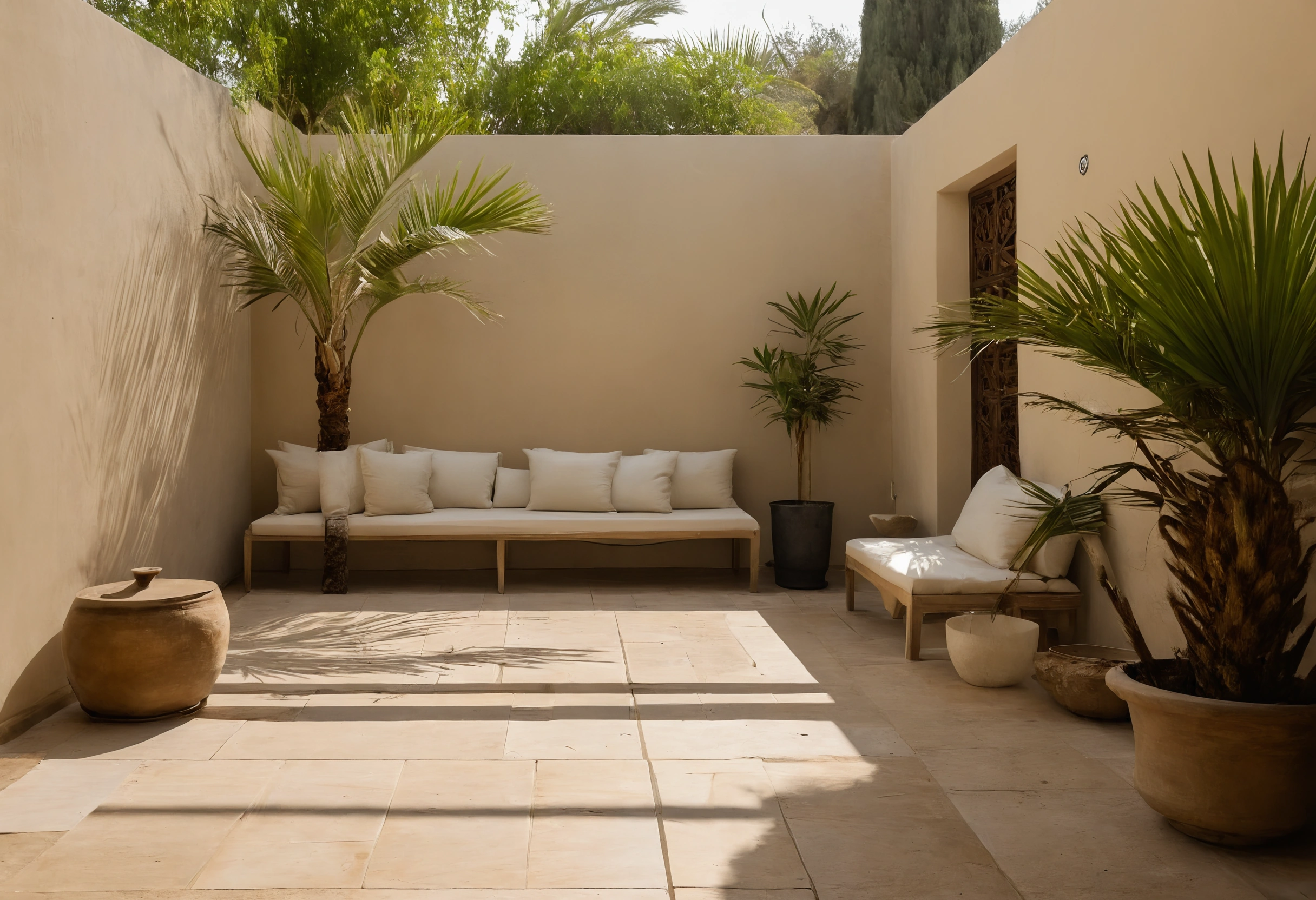
Sun shadows are sharp because the disc is small in the sky. NASA's Sun fact sheet lists an apparent diameter of 1919 seconds of arc at one astronomical unit, which is 0.53 degrees. A shadow edge blurs by about 0.93 % of the distance to the object.
A window mullion 1.5 m from a wall casts an edge about 14 mm wide; a chair leg 0.3 m above the floor casts one under 3 mm wide. Hard shadow edges photograph as black shapes attached to furniture, which is why a raking December beam is harder to control than a June noon.
Which is easier to shoot: summer noon or winter morning?
Summer noon is easier for rooms with recessed or shaded glazing, while winter mornings and afternoons offer the drama of a low beam if the photographer controls it. The list below compares the two approaches for a typical south-facing living room.
- Summer noon (elevation near 88 degrees): even light, direct beam under 0.1 m from the glass, wide brightness gap only between the window and the far wall.
- Equinox noon (elevation near 65 degrees): a floor patch of about 1.1 m, which a sheer curtain can soften.
- Winter noon (elevation near 41 degrees): a floor patch of about 2.7 m that crosses rugs and sofas and needs diffusion or a timed shot.
- Early morning and late afternoon: sun near the horizon, long beams and warm colour, so decide before the shoot which surfaces may carry a patch.
Does Dubai glazing change what the camera records?
Glazing changes both the amount and the balance of the light. Berkeley Lab notes that a summer solar heat gain coefficient of 0.16 leaves visible transmittance above 0.30, so a pane built to that target can pass little more than 30 % of visible light and can tint a scene.
Low-emissivity coatings filter infrared while letting visible light through, so a lightly coated pane behaves differently from a dark tinted one. A grey card photographed through the open door and again through the closed glass shows the difference in seconds.
When does dust soften the light in Dubai?
Airborne dust softens and dims sunlight. The UN weather agency WMO states that dust in the air can block sunlight and disrupt solar energy production, which in a room means lower contrast, a weaker beam and softer shadow edges than the clear-sky figures in the table would suggest.
A dusty day can rescue a winter shoot: the beam loses its hard edge and the brightness gap between window and wall narrows. Plan alternative dates for both cases and check the sky on the morning of the shoot, since a dust haze can also flatten distant views through the glass.
How should a photographer plan a Dubai interior shoot?
Plan around the sun's elevation, not the clock. Each season has a window in which the beam misses the surfaces that matter, and the table gives that window for a south-facing pane. West-facing rooms take low sun in the afternoon in every season, so schedule them for the morning.
- Choose the room and note which way each pane faces.
- Look up solar transit for the shoot date on the U.S. Naval Observatory service.
- Calculate the beam depth from the head height of the glass.
- Test a grey card through the glass to see any tint.
- Bracket exposures and merge them if the gap between window and wall is wide.
Rooms with several panes at different heights need one calculation per pane. A double-height living room can carry a beam three times as deep as a bedroom window in the same tower.
Frequently asked questions about photographing interiors in Dubai sun
The answers below cover timing, curtains and dust for a photographer or a homeowner preparing a room. Every figure comes from the sources linked earlier: NOAA's declination range, the U.S. Naval Observatory's transit times, NASA's solar diameter and Berkeley Lab's glazing values for a south-facing pane.
What is the best month for interior photography in Dubai?
There is no single best month. The 88 degree June noon suits shaded rooms; December suits photographers who want long beams. For an even light across a south-facing living room, an equinox noon at 64.8 degrees leaves a patch of about 1.1 m that a sheer curtain can soften.
Should the curtains be open or closed?
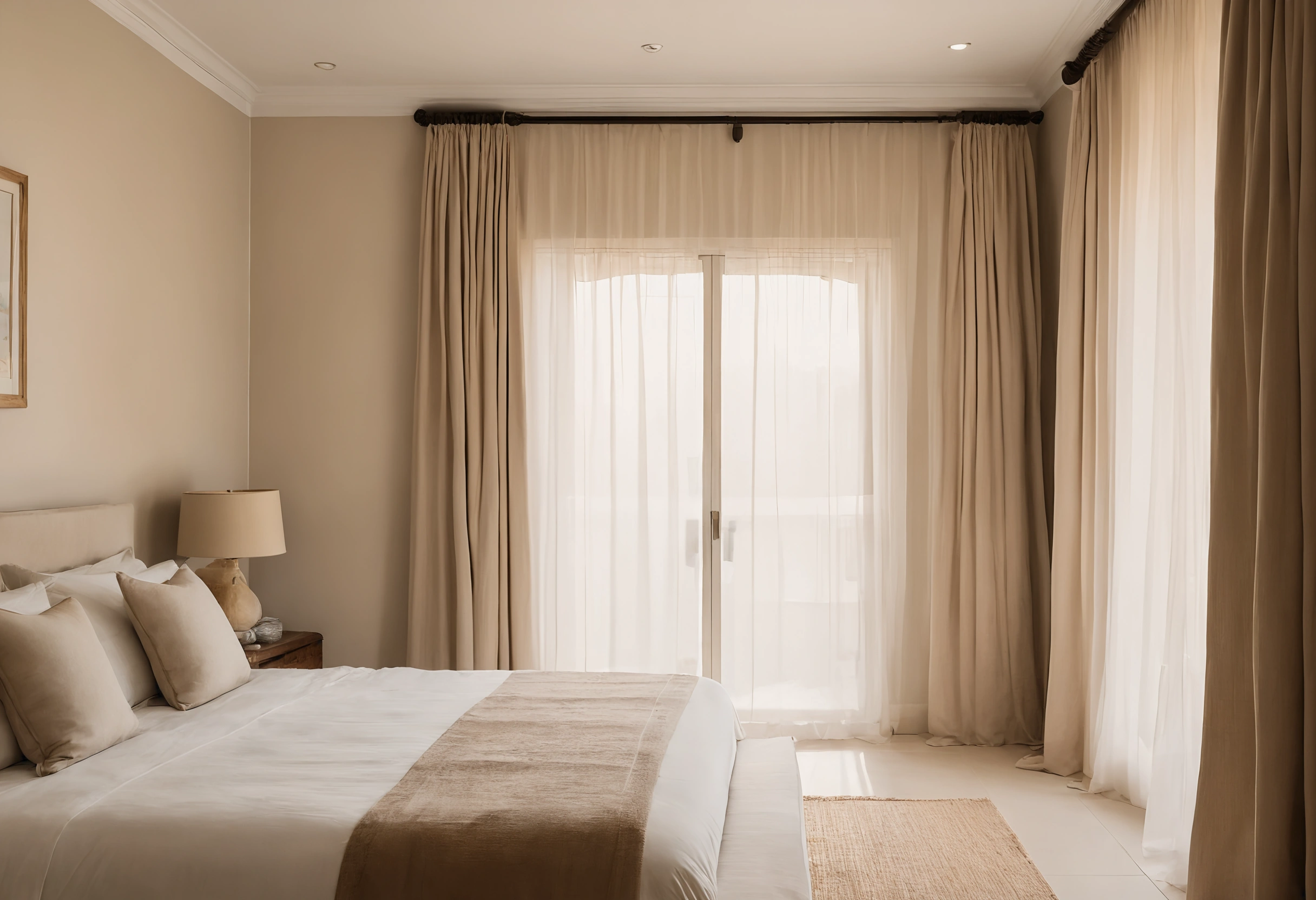
Sheer curtains give the most control. Drawn across the window they diffuse a direct beam, and the room keeps its view. Blackout curtains close the light entirely, which suits a lit-lamp shot but not a daylight one.
Does dust make interior photographs worse?
Not necessarily. Dust in the air blocks part of the sunlight, according to the WMO, so the beam weakens and shadows soften. The trade-off is a flatter sky and a hazy view through the glass.