Correcting verticals
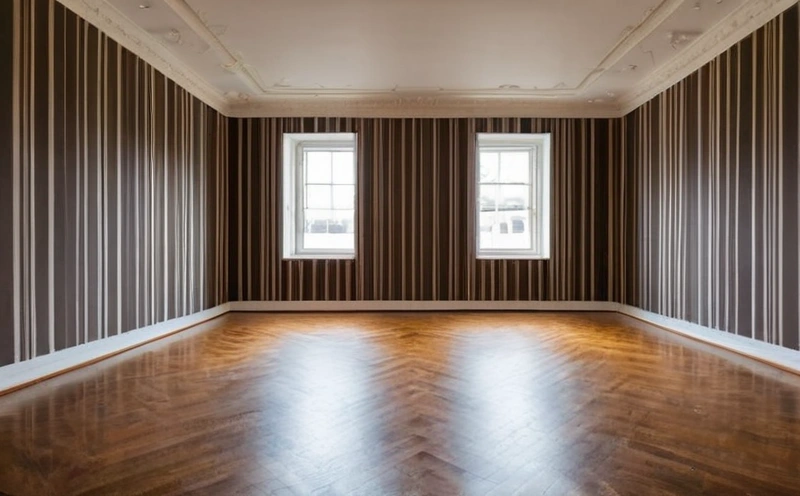
Converging walls are the quickest way to make a well proportioned room look wrong. A viewer rarely names the fault, yet the viewer sees the room narrowing towards the ceiling and reads the space as cramped. Door frames, window reveals, radiator pipes and the edges of tall cupboards each carry the error, and a single 4.2m by 3.6m living room contains around 30 of those lines. Levelling the sensor takes about 30 seconds at the tripod and saves the 4.5 megapixels that a 4 degree software correction removes from a 24 megapixel file.
What makes vertical lines converge in a room photograph?
Tilting the camera off horizontal is the only cause of converging verticals, at any focal length. A sensor held exactly parallel to the wall in front of the lens renders every vertical on that wall as a vertical in the frame, whether the lens measures 16mm or 85mm. Tilting up by 5 degrees leans the same walls inward.
Tilting down splays the walls the other way. A camera pitched 5 degrees below horizontal to show more floor renders the bottom of a 2.6m wall wider than the top, and a viewer reads that as a room falling away. Wide lenses collect the blame for both faults, yet a 24mm lens held at 0.0 degrees of pitch produces walls that run parallel to the frame edge from skirting to cornice.
The error scales with tilt and with how much of the wall the frame holds. A camera 4m from a 2.6m wall, pitched up by 1 degree, renders the top of that wall 1.1 per cent narrower than the base, which is 68 pixels across a 6000 pixel frame. The same camera pitched up by 4 degrees renders the top 4.4 per cent narrower, or 265 pixels, which is visible on a phone screen.
What camera height suits each room type?
Most tilting happens because the tripod sits at the wrong height and the operator compensates. Barbara Brown sets the sensor between 45 and 55 per cent of ceiling height for a standard room frame, and at 38 to 42 per cent when the floor plan is the selling point. A 2.4m ceiling takes the camera at 115cm to 130cm.
| Room | Typical ceiling | Camera height | Share of ceiling |
|---|---|---|---|
| Living room, Victorian terrace | 3.2m | 125cm | 39 per cent |
| Living room, new build | 2.4m | 120cm | 50 per cent |
| Bedroom | 2.4m | 115cm | 48 per cent |
| Kitchen | 2.4m | 145cm | 60 per cent |
| Bathroom | 2.4m | 130cm | 54 per cent |
| Table or shelf detail | 2.4m | 105cm | 44 per cent |
Kitchen height is the exception that proves the ratio. A worktop stands at 90cm, and a sensor at 120cm sees that worktop as a 30cm thin edge with no surface. Raising the sensor to 145cm opens the worktop to a readable plane and shows the stone the client paid for, at the cost of a lower ceiling line in the frame.
Height also changes how large the furniture reads. A sensor at 110cm in a 2.4m room places the horizon below the top of a 85cm sofa back, so the sofa reads large and the ceiling reads generous, which suits a small flat. A sensor at 150cm shows more floor area and suits an open plan kitchen of 30 square metres or more.
How accurately does a tripod need levelling?
A two axis bubble on a tripod resolves to about 1 degree, and 1 degree of pitch across a 2.6m wall shot from 4m shifts the top of that wall by 40mm. The in camera electronic level resolves to 0.1 degrees, so Barbara Brown levels the legs and trims the head until pitch and roll read 0.0.
Anything inside 0.2 degrees of level needs no correction in software, because 0.2 degrees across the same wall moves the top edge by 8mm, well under the width of a skirting shadow. Between 0.2 and 1.0 degrees the correction is cheap: a 3 per cent crop restores square. Past 2 degrees the crop starts eating composition rather than margin.
Floors in Bristol terraces built before 1900 run out of level by 10mm to 30mm across a 4m span, so the three tripod legs finish at three different lengths. Adjusting the leg sections rather than the ball head keeps the centre column vertical, and a vertical column is what keeps a shift lens shifting straight up instead of up and sideways.
Does a 24mm shift lens beat software correction?
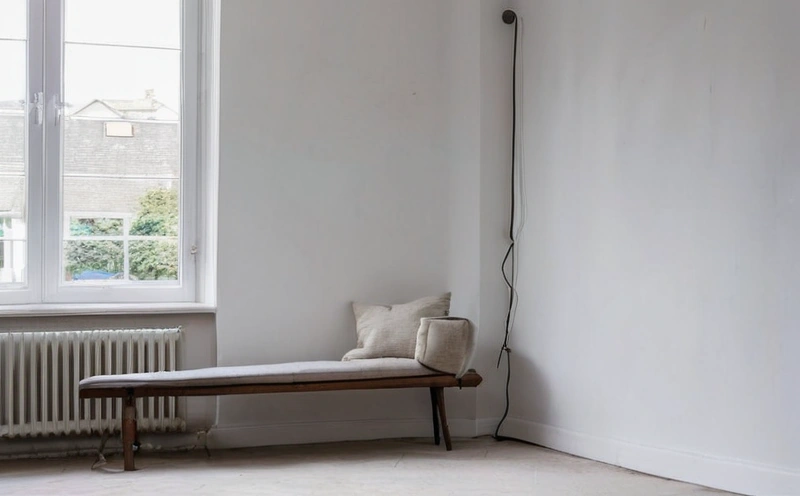
A 24mm shift lens covers an image circle wide enough to move the 24mm by 36mm frame up by 11mm or 12mm with the sensor still plumb. A rise of 8mm points the frame centre 18.4 degrees above horizontal while every vertical stays parallel, and the file arrives home already square at full resolution: 45.1 megapixels in, 45.1 megapixels out.
A level 24mm lens with no shift already reaches 26.6 degrees above horizontal, which from 4m away tops out at 3.25m with the sensor at 1.25m. Adding 8mm of rise moves the top of the frame to 39.8 degrees and the bottom to 9.5 degrees below the top of the frame, so a 3.2m Victorian ceiling enters the picture and the floor immediately under the tripod leaves the picture.
Software correction in Lightroom or Capture One performs the same geometry after the fact by stretching the top of the frame outward, then cropping the empty wedges. The cost is measurable. Correcting a 4 degree pitch on a 6000 by 4000 pixel file removes about 265 pixels of width and 600 pixels of height, so a 24.0 megapixel frame delivers at 19.5 megapixels.
| Pitch from level | Convergence, 2.6m wall at 4m | Headroom to leave | Crop after correction | Delivered |
|---|---|---|---|---|
| 0.0 degrees | 0.0 per cent | none | none | 24.0 MP |
| 1.0 degree | 1.1 per cent | 3 per cent | 70 by 160 px | 22.8 MP |
| 2.0 degrees | 2.2 per cent | 5 per cent | 135 by 320 px | 21.6 MP |
| 4.0 degrees | 4.4 per cent | 10 per cent | 265 by 600 px | 19.5 MP |
| 8.0 degrees | 8.7 per cent | 18 per cent | 530 by 1150 px | 15.6 MP |
What does cropping a corrected frame really cost?
Resolution is the loss a client notices last and framing is the loss that arrives first. A correction crop always comes off the top and the sides, so the composition delivered to the architect is not the composition seen on the ground glass. Furniture that sat 40mm inside the frame edge finishes cut.
Placement drifts as well as size. A lamp set a third of the way across a 6000 pixel frame sits 2000 pixels from the left edge before correction and about 1735 pixels from the left edge after a 4 degree correction crop, which walks the lamp towards the corner of the delivered file.
Correction also lengthens the effective focal length in an uneven way. A 24mm frame corrected by 4 degrees and cropped to a rectangle loses 4.4 per cent of width and 15 per cent of height, so the horizontal angle narrows to what a 25mm lens covers from that tripod position and the vertical angle to what a 28mm covers. The delivered file is no longer 3:2.
Pixels at the top corners take the stretch. A 4.4 per cent horizontal stretch applied to the top row of a 6000 pixel frame interpolates 265 pixels of new data across the top edge, which softens a grout line in a splashback or the mitred edge of a picture frame enough to see at 100 per cent. Leaving 10 to 12 per cent headroom at the top when a correction looks likely keeps the delivered composition predictable.
What is the field routine for plumb verticals?
Barbara Brown runs the same five step routine on every angle, and the routine takes about 90 seconds from bag to first frame: set the height for the room type, level the legs, zero both axes on the camera level, frame with lens shift rather than the head, then check one long vertical against the viewfinder grid.
- Set sensor height for the room type, 115cm to 145cm on a 2.4m ceiling.
- Level the three leg sections, then zero pitch and roll on the camera level.
- Frame with the lens shift, stopping at 8mm of rise on a 24mm.
- Check one long vertical, usually a door jamb, against the grid overlay.
- Leave 10 per cent headroom at the top if a software correction is likely.
Squared verticals and a settled sky give a clean base frame at 1 second and f/11. The variable left is what actually sits on the surfaces in the room, which is why preparing a room runs to 50 minutes for a lived in living room against 9 minutes for the frame itself.